
For knowledge that will change the way you think about money and investing
Table of contents
The phone buzzes. Inflation hits a new high, it says. “I really need to get a better grip on my finances.” This thought often creeps in somewhere between the supermarket checkout, a push notification, and a bank balance. Suddenly, the prices in your cart feel twice as expensive. Behind you, someone is talking about bonds, investments, and returns. And on the way home, you wonder where to even begin. Terms like interest rates, sustainability, and other buzzwords swirl around you.
The savings account is losing value, retirement plans seem shaky, and trust in old financial models is crumbling. At the same time, there’s a growing desire to use money meaningfully—not just to grow it, but to shape something with it. Investing in ideas, in the future, in responsibility.
But how do you get started? Books open your eyes to connections, tell the stories behind the markets, and show how our thinking about money shapes our lives. They’re more than just advice.
We’ve selected these ten books for anyone who wants to understand how money, values, and the future are interconnected. And for those who want to invest smarter, more consciously, and with greater purpose.
Why engage with investing?
More and more people want to take responsibility – over their wealth, their future, and their values. It’s about:
- Planning ahead: State pensions are no longer enough for many. Private investments are becoming a second pillar.
- Autonomy: When you invest, you decide what happens with your money.
- Values: Sustainable and social investments are gaining importance. Returns alone are no longer convincing.
- Security: In uncertain economic times, knowledge creates stability
Invesdor is a platform that offers access to investment projects that combine returns with responsibility, through crowdinvesting, equity, or convertible bonds, with transparency and impact. But how do you choose? A solid understanding of investing is key. That’s why we’ve put together a list of finance books that can help you make informed decisions in 2026 to invest and grow your money.
How the list was created
This list isn’t based on sales figures. Each book was decided for the value it brings to you as an investor. The criteria:
- Current topics and fresh perspectives
- Practical relevance for real-world investment decisions
- Clarity, even without a finance degree
- Connection to sustainable or alternative investments
- Readable and inspiring
The 10 Best Finance Books of 2025
1. The Big Pivot, Andrew S. Winston
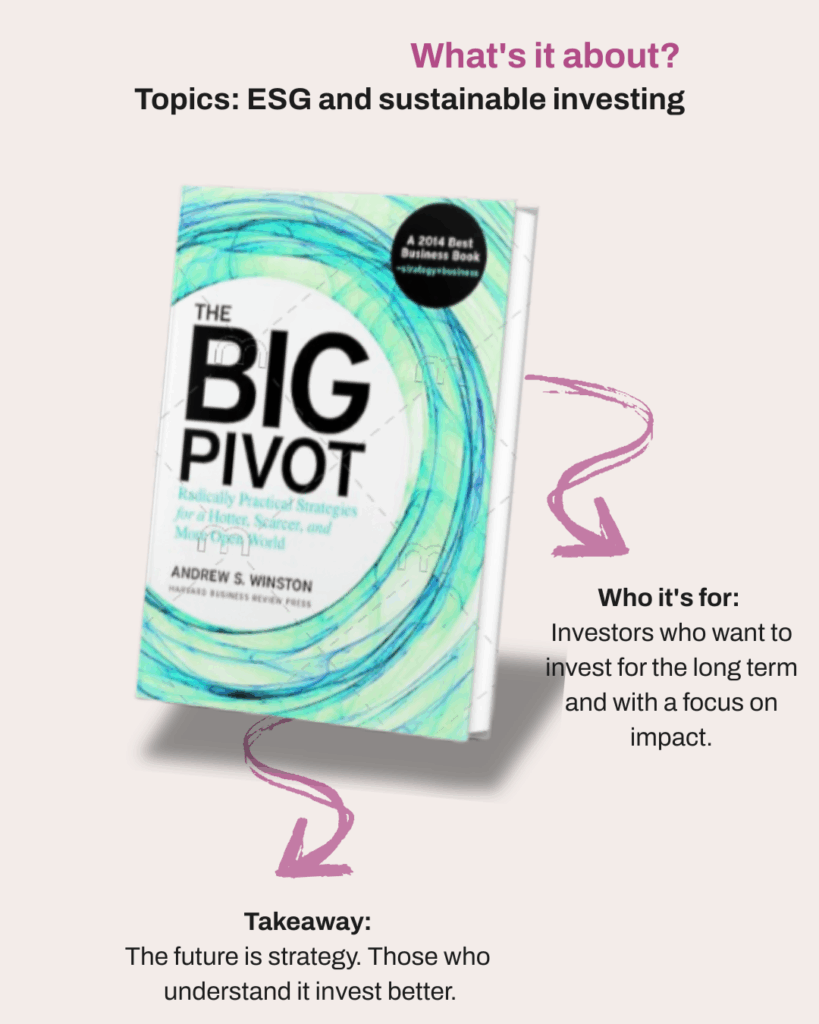
What it’s about: This book explores how companies and investors are aligning with sustainable strategies in the face of climate change, resource scarcity, and increasing transparency. It offers ten proven, practical approaches.
Why we recommend it: ESG and future-proof investing are key themes for 2025 and will remain so in 2026.
Who it’s for: Investors who want to take a long-term, impact-oriented approach.
Link: https://amzn.eu/d/9W05B4t
Take-away: The future is strategy. If you understand it, you invest better.
Good fit if
✅ You prefer sustainable investments
✅ You assess companies based on impact
✅ You think long-term
Not for you if
❌ You’re only after short-term gains
❌ You want to stick to traditional metrics
❌ You’re not interested in deeper strategic thinking
Better suited alternative: Thinking in Bets von Annie Duke, if you’re looking to structure decisions and risk in a more pragmatic way.
2. Thinking in Bets, Annie Duke
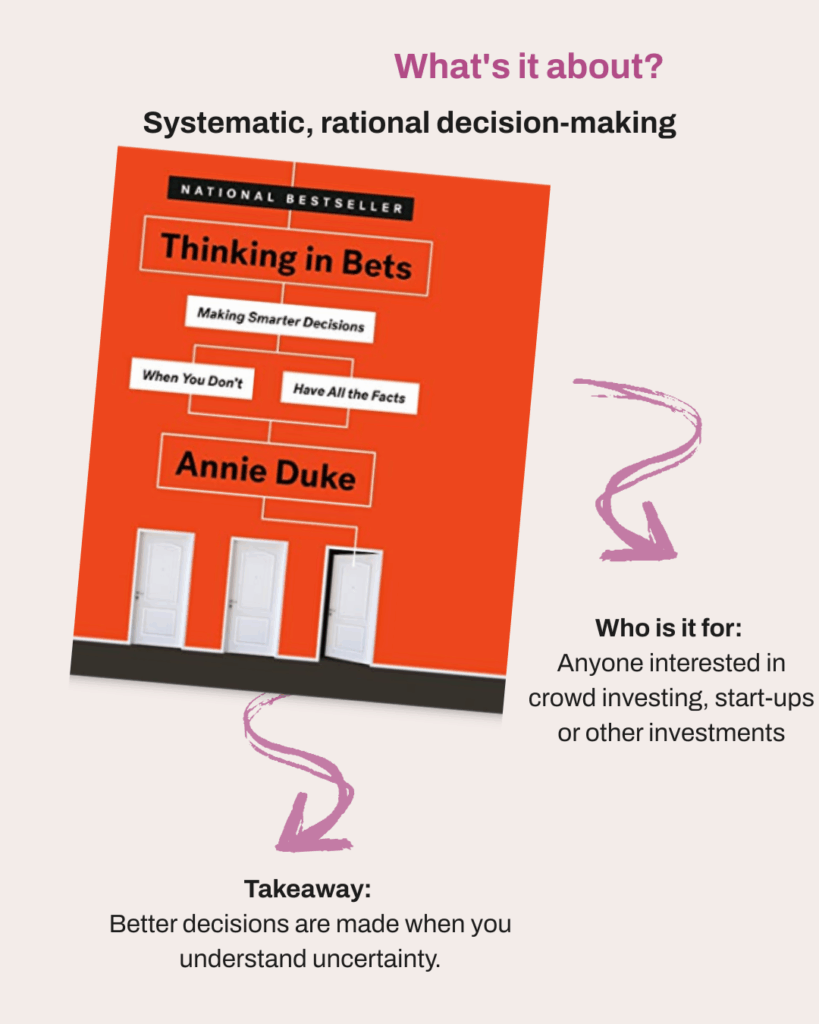
What it’s about: Poker champion Annie Duke explains how to make smarter decisions under uncertainty. Encourages rational thinking over prediction-based guesswork.
Why we recommend it: Especially useful for alternative investments.
Charles Duhigg, author of The Power of Habit and Smarter Faster Better, says: “With wonderful storytelling talent and subtle humour, Annie Duke has created the ultimate guide to dealing with risk. We can all learn to make better decisions by learning from someone who earned a living making decisions where millions were at stake.”
Who it’s for: Anyone exploring crowdinvesting, start-ups, or other higher-risk investments.
Link: https://amzn.eu/d/2vLu5pQ
Take-away: Better decisions come from understanding, not resisting, uncertainty.
Good fit if:
✅ You want to improve your decision-making
✅ You invest actively and manage risk
✅ You’re exploring alternative investments
Not for you if:
❌ You prefer passive, automated strategies
❌ You dislike self-reflection
❌ You expect fast, emotional results
Better suited alternative: The Psychology of Money von Morgan Housel, if you are looking for a more accessible introduction to behavior.
3. The Psychology of Money, Morgan Housel
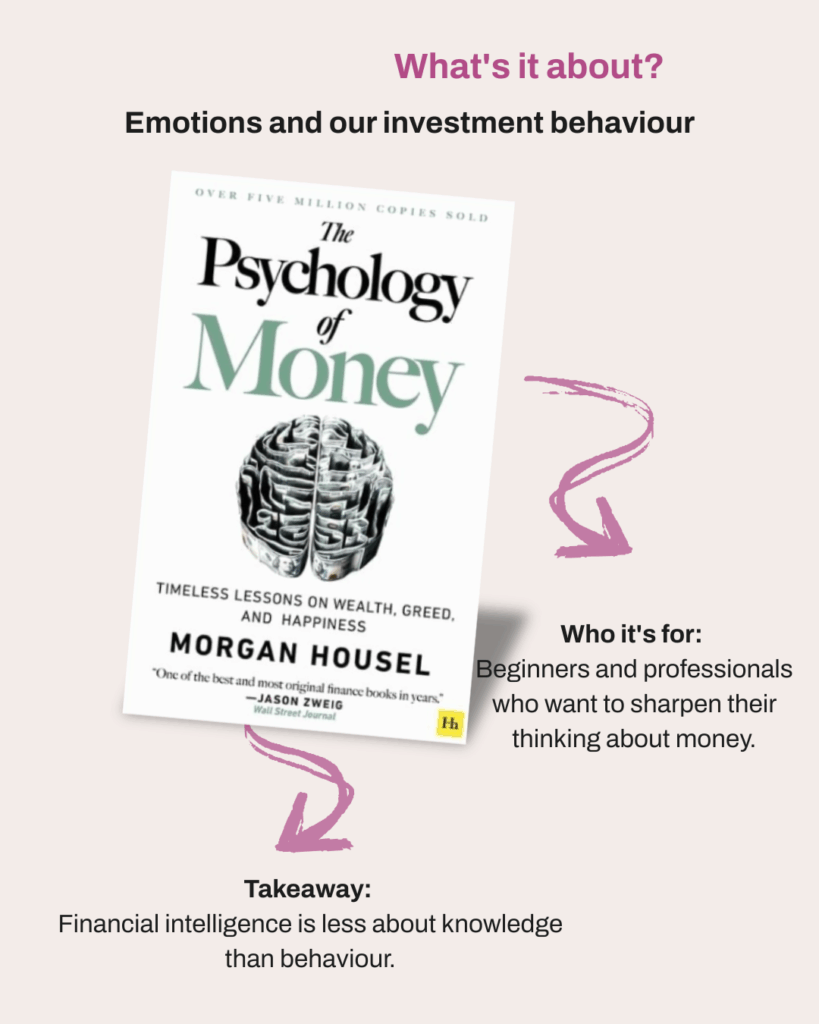
What it’s about: Behavioral finance lessons on money, wealth, and contentment. Shows how emotions influence our investment decisions.
Why we recommend it: In 2025, uncertainty and distractions dominate – behavior drives returns.
Tim Hale, author of Smarter Investing – Simpler Decisions for Better Results, says: “Morgan Housel’s new book uses razor-sharp and accessible insights to illustrate that building wealth is a matter of mindset, not investment. This is the first book every investor should read.”
Who it’s for: Beginners and professionals who want to sharpen their thinking about money.
Link: https://amzn.eu/d/7G2RDni
Take-away: Financial intelligence is less about knowledge and more about behavior.
Good fit if:
✅ You want to understand and improve your mindset
✅ You invest calmly and with a long view
✅ You appreciate storytelling and examples
Not for you if:
❌ You expect technical strategies and formulas
❌ You only want finance jargon
❌ You don’t plan on reflecting
Better suited alternative: Adaptive Markets von Andrew W. Lo, if you prefer an analytical theoretical perspective on markets.
4. Quit, Annie Duke
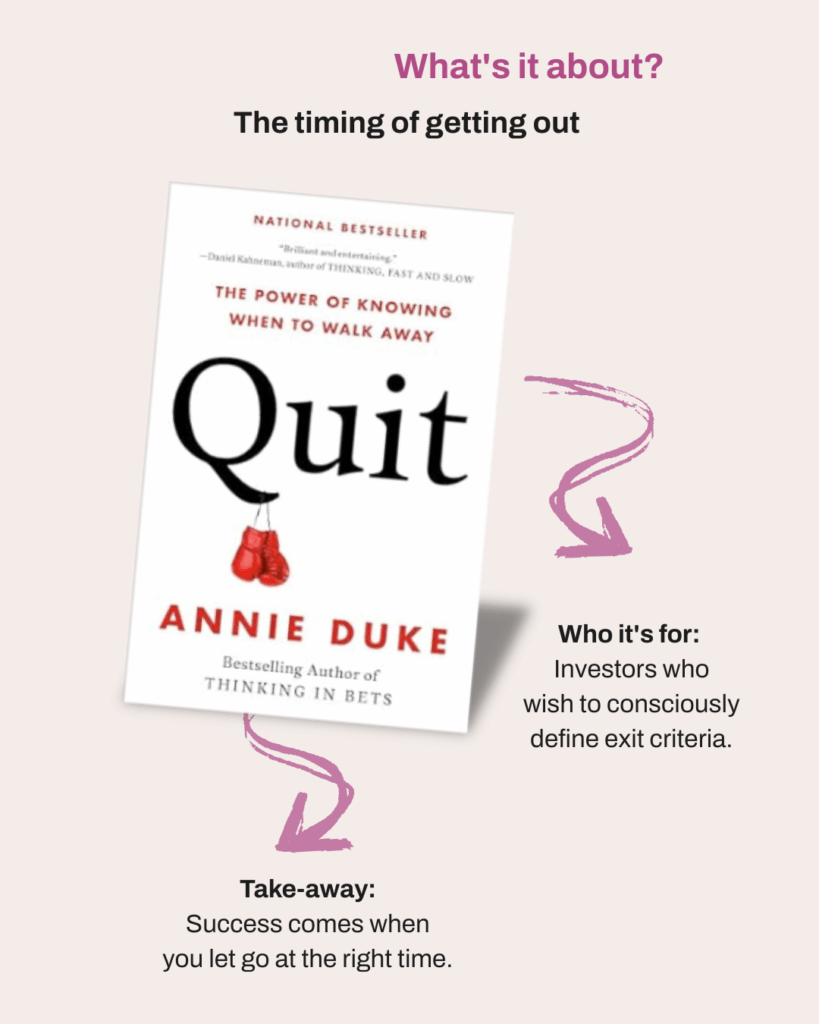
What it’s about: How to know when to walk away from a decision. Duke shows that quitting at the right time is smarter than persisting at all costs.
Why we recommend it: Risk management is crucial in 2025, especially in VC and crowdinvesting.
Who it’s for: Investors who want to consciously define exit criteria.
Link: https://amzn.eu/d/5YK5dUe
Take-away: Success comes when you let go at the right time.
Good fit if:
✅ You actively manage investments and risks
✅ You want to detect mistakes early
✅ You make decisions analytically
Not for you if:
❌ You stubbornly stick to plans
❌ You rely on gut feeling
❌ You dislike questioning strategies
Better suited alternative: Thinking in Bets, to first build a stronger decision-making foundation.
5. The Business of Venture Capital, Mahendra Ramaswamy
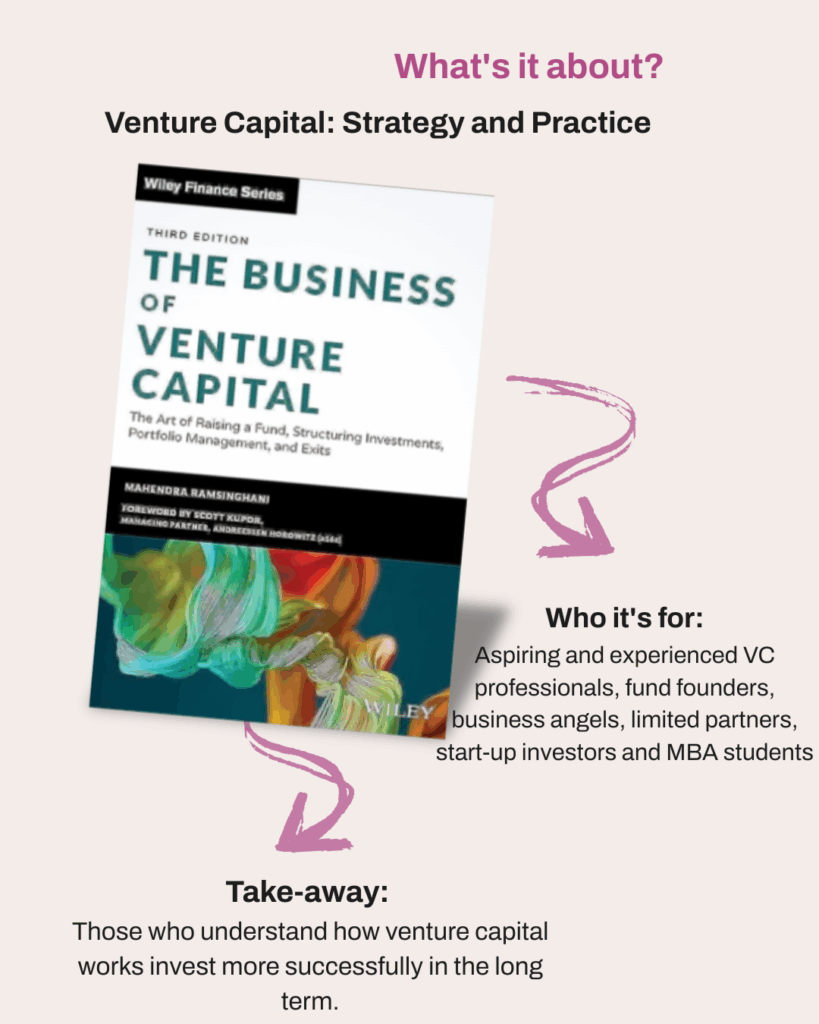
What it’s about: Guide to establishing and managing venture capital funds, including fundraising, investment structure, portfolio development, value creation, and exit strategies. With checklists, case studies, and practical expertise from experts.
Why we recommend it: Venture capital remains a key area within alternative investments. This book offers strategic insights and practical tools straight from the source, valuable for investors as well.
Who it’s for: Aspiring and experienced VC professionals, fund founders, business angels, limited partners, start-up investors, and MBA students.
Link: https://amzn.eu/d/4zdvLzC
Take-away: Those who understand how venture capital works invest more successfully in the long term.
Good fit if:
✅ You want to invest in start-ups or companies
✅ You want to understand deal structures
✅ You see equity as a strategy
Not for you if:
❌ You don’t have time for technical topics
❌ You prefer narrative-driven books
❌ You stick to very simple products
Better suited alternative: Richer, Wiser, Happier by William Green, if you would rather understand investments through the personal principles and experiential knowledge of successful investors.
6. The End of ESG, Phil Gramm and Terrence Keeley
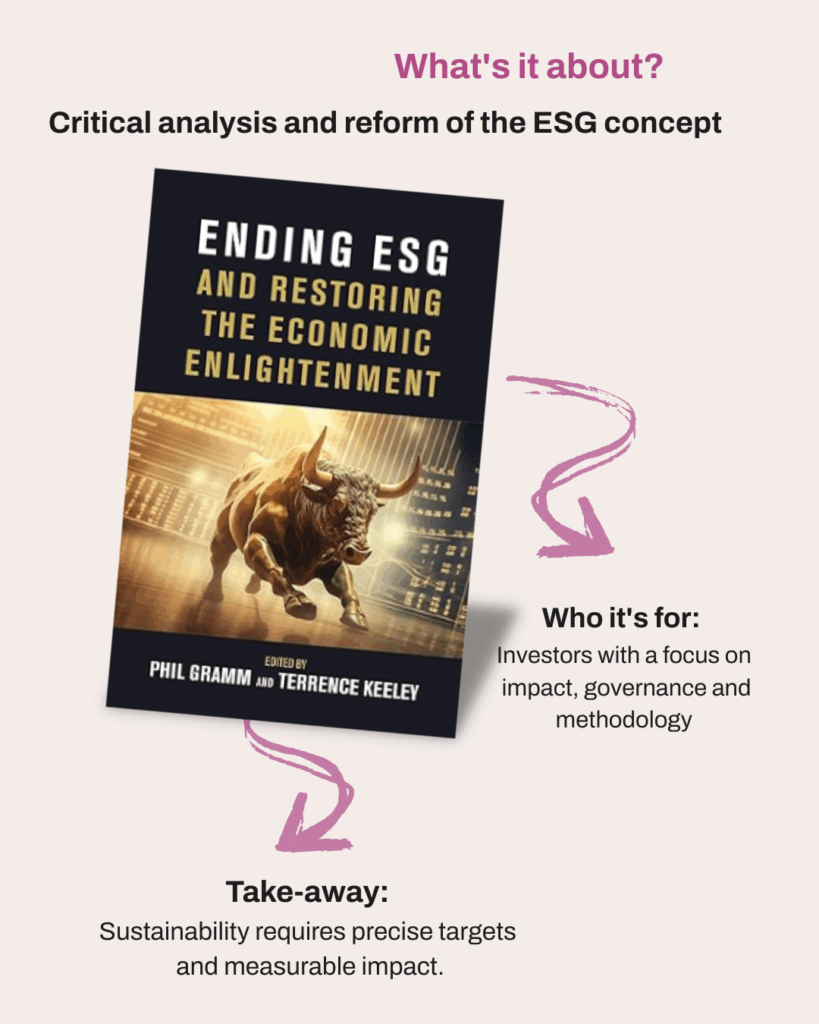
What it’s about: A critical analysis of why ESG needs reform and how impact investing can be made more effective.
Why we recommend it: Der ESG-Diskurs prägt 2025 Anlagepolitik, Regulierung und Produkte. Dieses Buch ordnet ein und öffnet Perspektiven.
Who it’s for: The ESG discourse is shaping investment policy, regulation, and products in 2025. This book provides context and opens up new perspectives.
Link : https://amzn.eu/d/2v80Uek
Take-away: Sustainability needs clear goals and measurable impact.
Good fit if:
✅ You want to truly understand ESG
✅ You structure portfolios based on impact
✅ You’re open to critical debates
Not for you if:
❌ You’re just looking to validate your ESG routines
❌ You’re not interested in methodology
❌ You chase returns without considering impact
Better suited alternative: The Big Pivot, if you want to see sustainability in a more practical way in everyday business life.
7. How Big Things Get Done, Bent Flyvbjerg
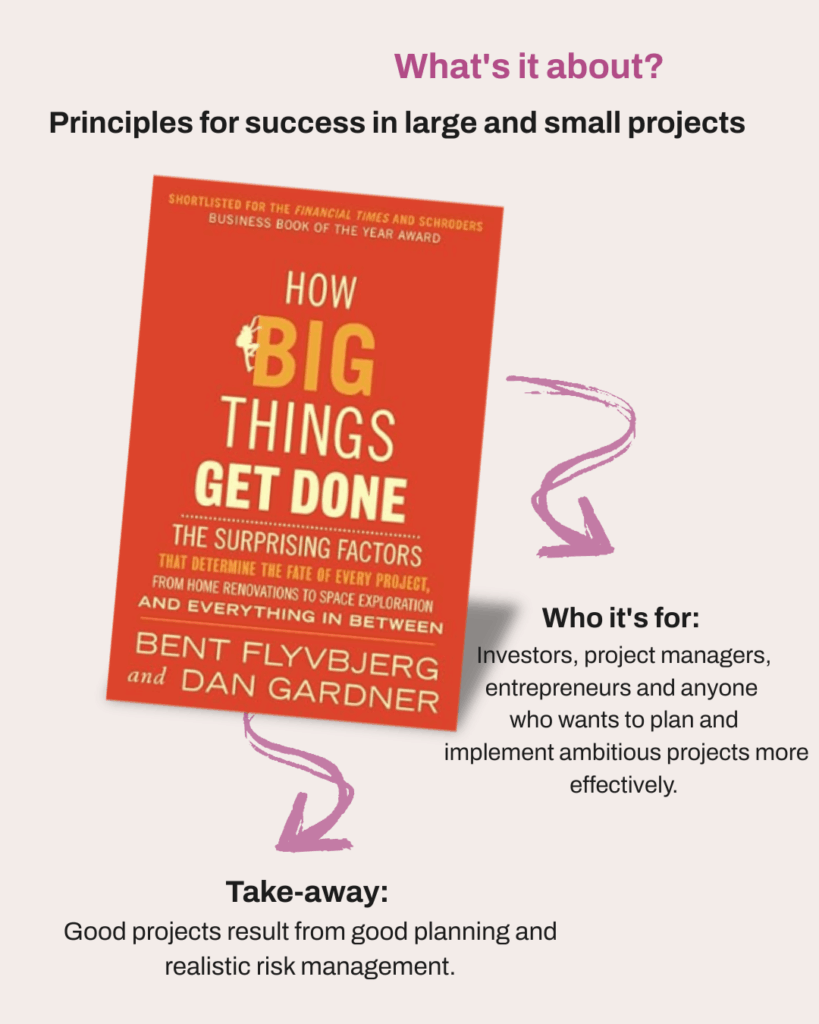
What it’s about: Success principles for projects big and small, from mega ventures to start-ups, from Olympic stadiums to kitchen renovations. With clear, data-driven strategies for delivering projects on time, on budget, and with realistic expectations.
Why we recommend it: Whether it’s real estate, infrastructure, or a start-up: project competence determines returns. This book delivers the formula for success, scientifically grounded and highly practical.
Who it’s for: Investors, project managers,
entrepreneurs and anyone who wants to plan and implement ambitious projects more effectively.
Link: https://amzn.eu/d/828Uyin
Take-away: Good projects result from good planning and realistic risk management.
Good fit if:
✅ You want to understand project logic
✅ You’re evaluating real estate or infrastructure investments
✅ You value practical case studies
Not for you if:
❌ You’re not interested in real-world project applications
❌ You only read about capital markets
❌ You prefer theory without case studies
Better suited alternative: Adaptive Markets, for more market model focus over project practice.
8. Adaptive Markets, Andrew W. Lo
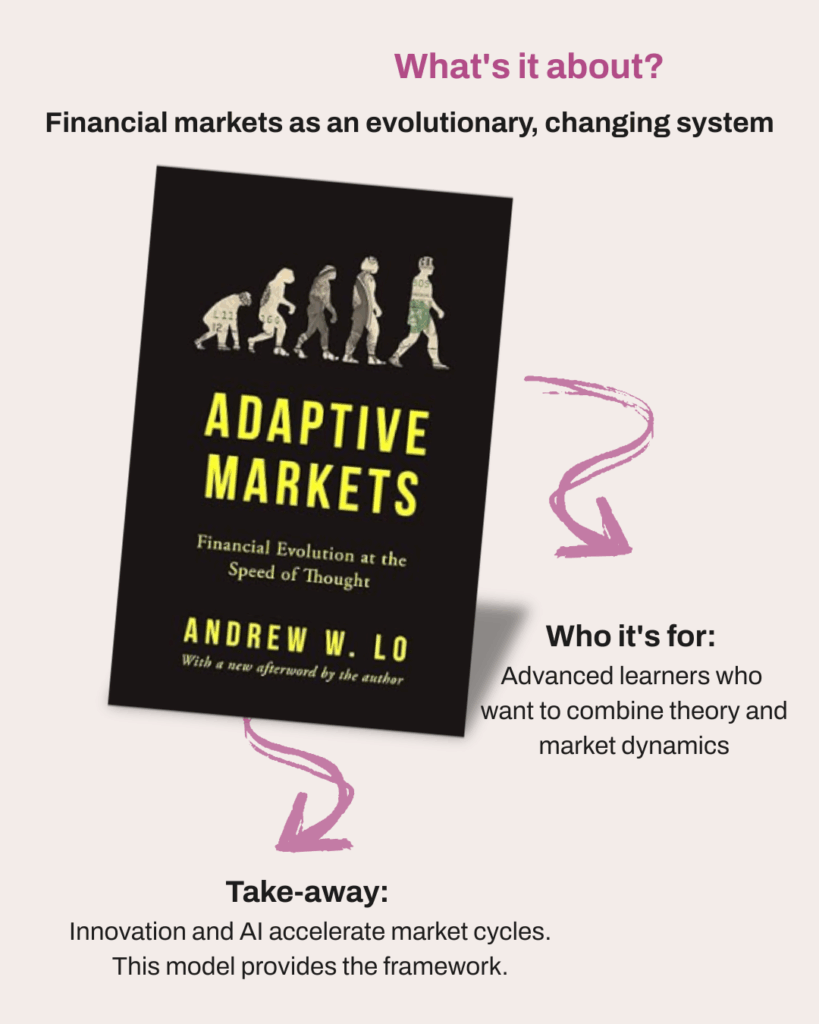
What it’s about: A new market model that combines classical financial theory with insights from psychology, neurobiology, AI, and behavioral economics. Lo shows that markets are not stable systems, they evolve. And so does investor behavior.
Why we recommend it: In times of innovation, AI, and crises, this book offers a deep understanding of how markets truly function, beyond black-and-white thinking between “rational” and “irrational.”
Who it’s for: Advanced investors, financial professionals and interested parties who want to gain a deeper understanding of theories and market dynamics.
Link: https://amzn.eu/d/9bSYCDa
Take-away: Markets are adaptive. Those who understand their dynamics can spot opportunities and avoid poor decisions.
Good fit if:
✅ You want to link theory with practice
✅ You want a structured view on market dynamics
✅ You enjoy analytical reading
Not for you if:
❌ You want a narrative, beginner-friendly entry point
❌ You dislike models and formulas
❌ You want quick, practical tips
Better suited alternative: The Psychology of Money, for a behavioral view without the theoretical burden.
9. What We Owe the Future, William MacAskill
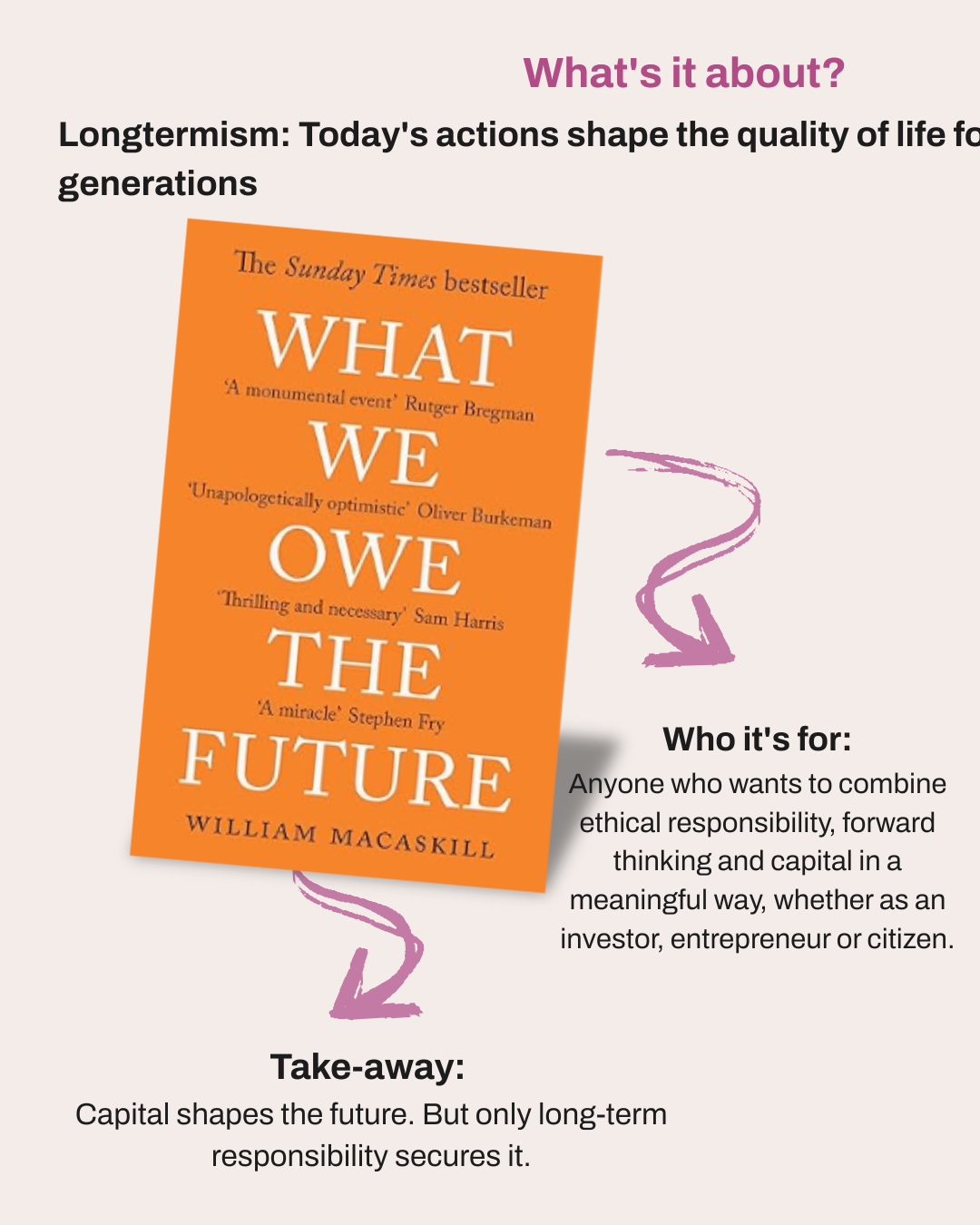
What it’s about: A philosophical case for “longtermism” – the idea that our actions today fundamentally shape the quality of life for future generations. MacAskill shows how we can take ethical, political, and technological responsibility for a livable future.
Why we recommend it: Sustainability doesn’t end with CO₂ emissions. This book broadens the perspective and offers an ethical framework for long-term thinking, also in the context of investing, technology, and societal development.
Who it’s for: For anyone who wants to meaningfully connect ethical responsibility, future-oriented thinking, and capital, whether as an investor, entrepreneur, or citizen.
Link: https://amzn.eu/d/3niocq2
Take-away: Capital shapes the future. But only long-term responsibility secures it.
Good fit if:
✅ You think long-term
✅ You integrate values into investment decisions
✅ You want to measure impact
Not for you if:
❌ You only chase short-term metrics
❌ You want to separate ethics from investing
❌ You expect product comparisons
Better suited alternative:The Big Pivot von Andrew S. Winston, if you prefer to view long-term responsibility in terms of concrete, business-oriented strategies and corporate practices.
10. Richer, Wiser, Happier, William Green
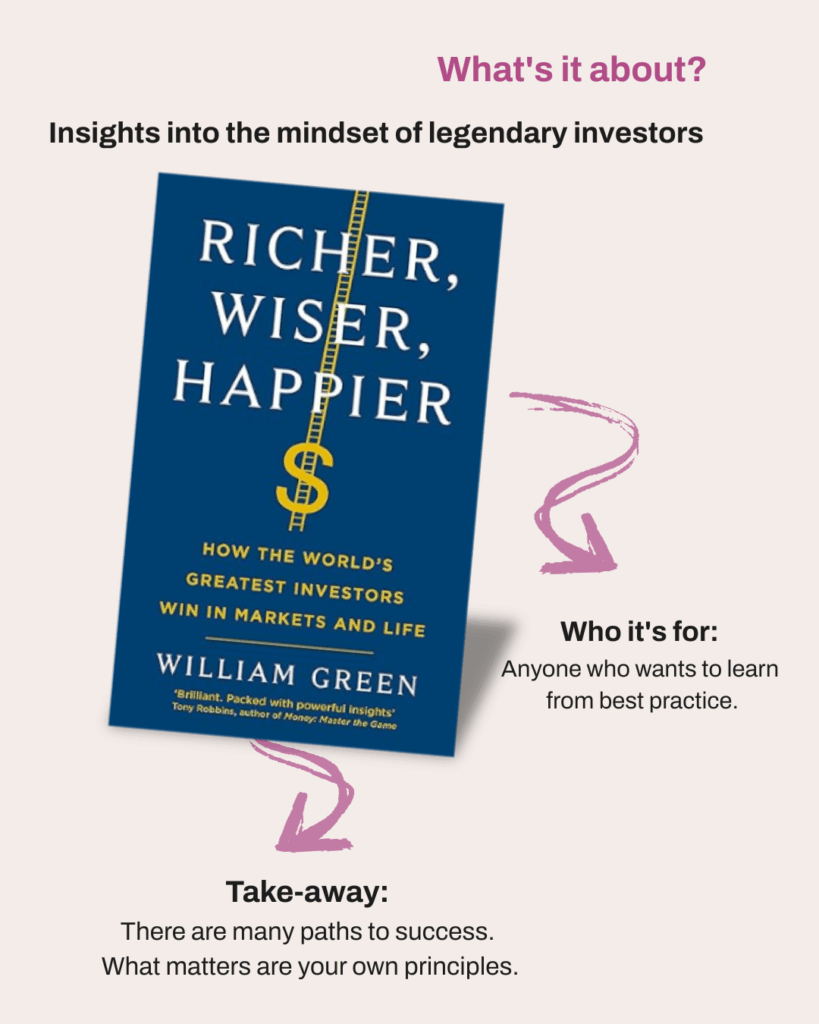
What it’s about: Conversations with successful investors.
This book offers insights into the mindset of legendary investors – from Sir John Templeton to Charlie Munger, ETF pioneer Jack Bogle to mathematician Ed Thorp, Will Danoff to globally focused Laura Geritz, Indian value investor Mohnish Pabrai to Joel Greenblatt and Howard Marks, whose memos Warren Buffett never missed. It reveals what drives their success and offers inspiration that goes far beyond money.
Why we recommend it: Learning curves from real-life biographies are both applicable and motivating.
Who it’s for: Anyone who wants to learn from best practice.
Link: https://amzn.eu/d/eItx6yh
Take-away: There are many paths to success. What matters are your own principles.
Good fit if:
✅ You’re seeking tested mindsets and behaviors
✅ You value real-world stories
✅ You want to refine your own investing playbook
Not for you if:
❌ You only want hard theory and formulas
❌ You expect step-by-step instructions
❌ You prefer impersonal case studies
Better suited alternative: The Business of Venture Capital—if you want to dive deep into formal equity structures.
Conclusion: Knowledge is the most reliable investment
These books don’t replace financial advice, but they expand your perspective. They help you understand markets, avoid thinking traps, and act with clarity.
Whether you’re just starting out or growing your portfolio: a good book is often the first step to better decisions.
Read mindfully. Think forward. Invest the way you want to live: consciously, informed, and with impact.
FAQ – Frequently asked questions about financial books
I am a beginner: where should I start?
With The Psychology of Money or Richer, Wiser, Happier. Both are accessible, inspiring and practical.
I am interested in sustainability.
Then read ‘The Big Pivot’ or ‘The End of ESG’. Both shed light on the topic from different, exciting perspectives.
I am looking for sound strategies for investments.
The Business of Venture Capital provides deep insights into professional structures and processes.
I don’t read much. Is it still worth it?
Yes. Even a single book can change your perspective on money. Start with 10-20 minutes a day; it’s worth it.
Invesdor – Investing with impact.
Crowd investing, bonds, equity.
Knowledge builds trust. Trust builds the future.
Successfully invest in companies
Investing is about finding the optimal balance between profitability, security and liquidity. Find an investment opportunity that matches your values, goals and investment type.
Tipps:


Join many others, create your account!


100+
Related articles

Why renewable energy loans run 5-10 Years, and what it means
Investor Education Seven Years Is Not a Waiting Room: Why Good Project Financing Takes Time A seven-year term makes many investors pause. It's a long time to plan around, and it's fair to ask why…

MedTech and Healthcare Investments: Opportunities, Risks, and Examples
From diagnosis to therapy: how investments are transforming the medical and healthcare industry and strengthening portfolios MedTech and healthcare investments direct capital to companies that develop medical technologies, digital health solutions and healthcare infrastructure. They…

Impact Investing: Do I really make a difference as an Investor?
What actually happens to your money after you invest? Does it quietly sit on a balance sheet or does it build solar sites, accelerate medical innovation and create measurable change? That is the core question…