
Circular Economy: how food waste is becoming protein

Every year, Europe throws away food worth 132 billion euros. Most of it gets burned.
Table of contents
📋 Key Takeaways
- The EU wastes over 59 million tonnes of food per year, worth an estimated 132 billion euros.
- Black soldier fly (BSF) larvae convert organic food waste into protein, fat, and fertilizer – a process called insect bioconversion.
- BSF protein has a carbon footprint of 1.5 kg CO2-equivalent per kg, versus 10 kg for beef.
- The EU authorised insect protein in aquaculture feed (2017) and poultry and pig feed (2021), opening a large regulated market.
- Austria generates 1 billion euros in avoidable food waste annually – one of Europe’s largest untapped circular economy opportunities.
Think about the last time you threw out an overripe banana, a handful of wilting greens, or the pulp left over after pressing juice. Now multiply that by every farm, food factory, and supermarket across Europe.
The number is hard to sit with. According to Eurostat, the EU wastes over 59 million tonnes of food every year, worth an estimated 132 billion euros. And that does not even count what disappears at the farm gate before it reaches anyone.
The default response for most of this waste has been the same for decades: burn it, compost it, or run it through a biogas plant. These are not bad options. But in a world where animal protein demand is set to climb 52% by 2050 and Europe imports nearly 89% of its phosphate fertilizers from politically unstable regions, they start to feel like we are leaving a lot on the table.
What is the circular economy?
The circular economy is an economic model that eliminates waste by keeping resources in use for as long as possible – extracting maximum value from them, then recovering and regenerating products and materials at the end of their service life. Applied to food, it means treating organic residues not as waste to dispose of, but as inputs for new production cycles.
What if this waste was never really waste at all?
Where does Europe’s food waste actually come from?
Most people picture overflowing kitchen bins when they hear “food waste.” The reality is messier than that. The EU’s waste problem is spread across the entire food supply chain, from field to factory to fork.
Here is the breakdown, according to the European Environment Agency:
- Households are the biggest culprit, responsible for around 55% of total food waste
- Food processing and manufacturing adds roughly 24 kg per person every year
- Farms themselves contribute about 10 kg per person per year before food even leaves the field
But the less-talked-about side of the story is agricultural side streams. The stuff that does not make headlines: the peelings and pomace from fruit and vegetable processing, the manure and slurry from livestock farms, the whey left over from making cheese, the husks and bran from grain milling. Tonne after tonne, day after day, at every farm and food facility across the continent.
Zoom out to the global picture and it gets even harder to ignore. The UN Environment Programme’s Food Waste Index 2024 puts global food waste at approximately 1.05 billion tonnes in 2022 alone. That is around 19% of all food produced for human consumption. Put it another way: if food waste were its own country, it would be the third largest emitter of greenhouse gases on the planet, behind only the USA and China.
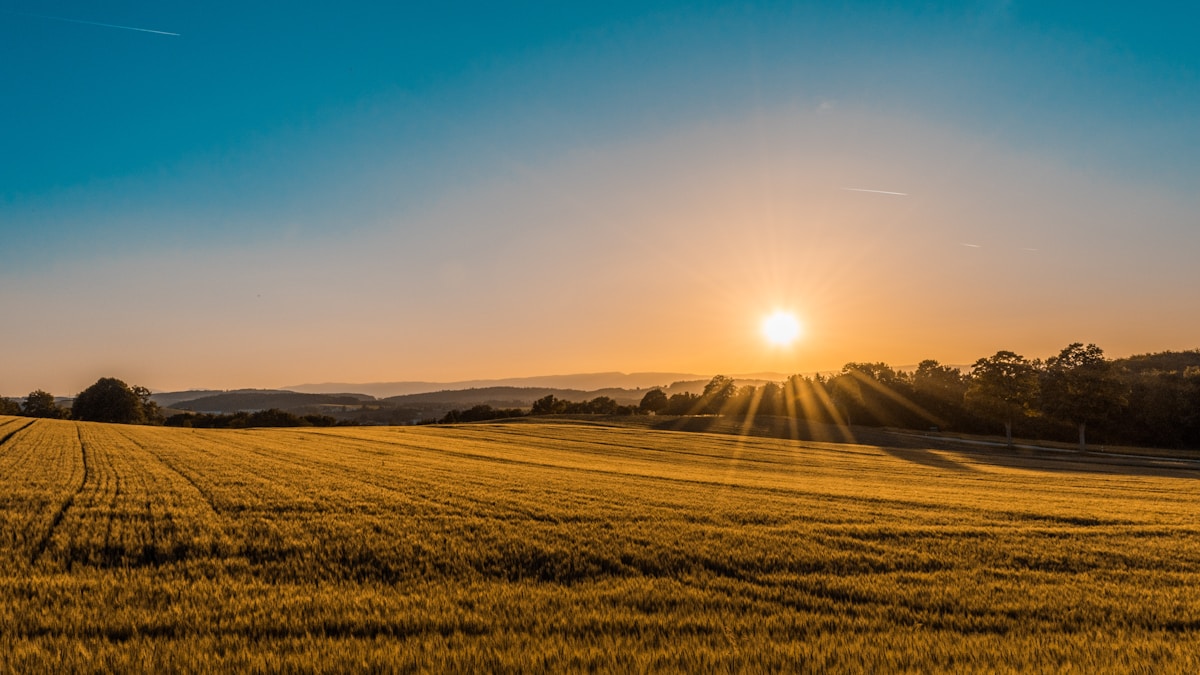
Photo: Unsplash
1.05 billion tonnes
of food wasted globally in 2022 alone — 19% of all food produced for human consumption
Why burning food waste is not a Circular Economy solution
Incineration turns a resource problem into a loss problem. You get energy once, and then everything else is gone forever.
For decades, sending organic waste to incineration or biogas plants has felt like a reasonable solution. You get energy out of it. That counts for something. But what gets quietly ignored is everything that goes in and never comes back out.
Take phosphorus. It is a finite, non-renewable mineral with no synthetic substitute, and it is essential for growing food. Europe imports nearly all of it, much of it from geopolitically fragile regions. When phosphorus-rich organic waste goes into an incinerator, it is not recycled. It is destroyed permanently. There is no getting it back.
The same is true for the proteins, fats, and micronutrients locked inside food side streams. We spent land, water, and energy producing them. Then we burn them and call it waste management.
The circular economy framework asks a different question entirely. Not: how do we get rid of this as cheaply as possible? But: how do we get the most value back out of it? That one shift in thinking changes everything that follows.
What is insect bioconversion, and how does it work?
It sounds niche. The science behind it is anything but.
One of the most compelling developments in circular economy research over the past five years is surprisingly low-tech: insects. Specifically the black soldier fly, a species that turns out to be extraordinarily efficient at converting organic waste into three useful things at once.
Feed it your food residues and you get back:
- High-quality protein, suitable for animal feed, aquaculture, and pet food
- Insect fat, which can replace conventional oils in industrial and feed applications
- Frass, an exceptionally nutrient-rich organic fertilizer that puts phosphorus straight back into the soil where it belongs
The climate comparison is striking. Life-cycle assessments put black soldier fly larvae at roughly 1.5 kg of CO2-equivalent per kilogram of protein produced. Beef sits at around 10 kg for the same amount. Research published in Frontiers in Sustainability found that using larvae to process food and agricultural residues can cut methane emissions by up to 80% compared to standard waste disposal.
🐄 Beef protein
~10 kg
CO₂-equivalent per kg of protein
🪲 Insect protein
~1.5 kg
CO₂-equivalent per kg of protein
What makes this practical rather than theoretical is the flexibility. The larvae are genuinely not picky. Fruit peelings, grain residues, wine pomace, dairy surpluses, poultry litter: it all works as feedstock. If one source dips seasonally, another fills the gap.
And the results hold up at scale. A Dutch study documented around 20,000 tonnes of insect protein produced annually from food waste in the Netherlands alone. A case study in Uganda found that applying BSF frass as fertilizer increased maize yields by 30%. These are not projections. They are documented outcomes.
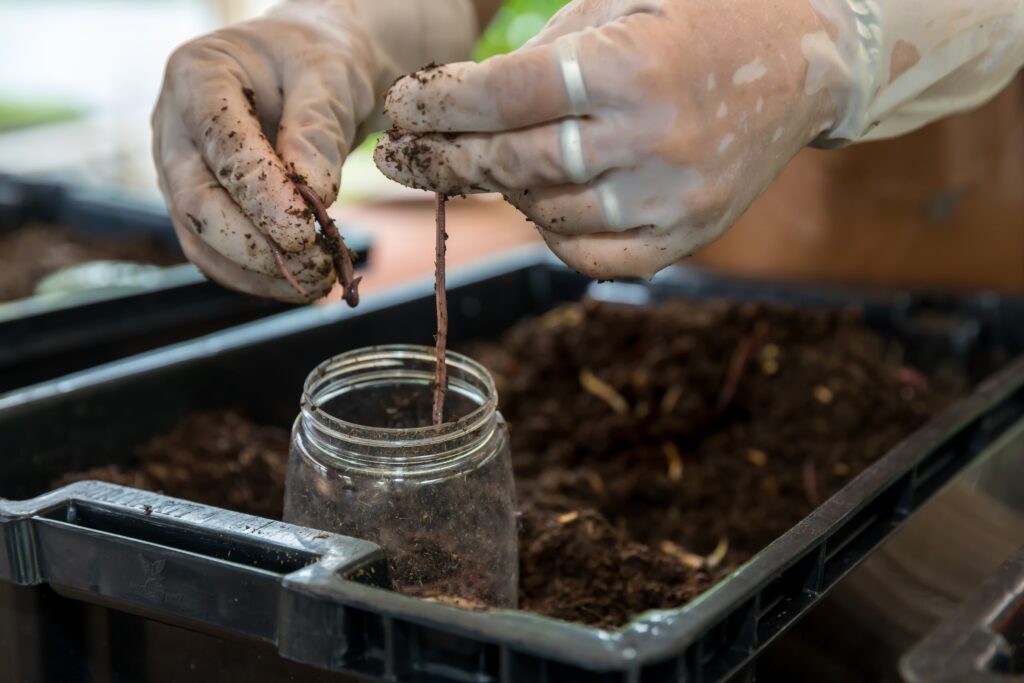
Photo: Envato
Is insect protein legal in the EU?
For a long time, regulation was the biggest bottleneck. Insect-derived proteins existed. The market for them existed. But the legal framework to actually use them in mainstream feed was not there.
That started to change in 2017, when the EU authorized insect proteins in aquaculture feed. Then in 2021, the authorization extended to poultry and pig feeds. That second step in particular unlocked a much larger market almost overnight.
On top of that, the EU has now introduced binding food waste reduction targets, requiring member states to cut food processing waste by 10% and retail and household waste by 30%, both by 2030. For food producers and processors, that means rising pressure to find better uses for their organic residues, and rising costs if they do not.
The market is moving accordingly. IPIFF estimates that EU production capacity could reach up to 1 million tonnes of insect meal annually by 2030. The global insect feed market is projected to grow at around 22% per year, reaching 3.6 billion dollars by 2031. The regulatory window is open. The commercial window is opening with it.
EU Regulatory Timeline
2017 — Insect proteins authorised in aquaculture feed (EU 2017/893)
2021 — Extended to poultry and pig feeds (EU 2021/1372)
2030 — Binding food waste reduction targets come into effect across all member states
Austria’s food waste problem and its Circular Economy opportunity
Austria is one of the most organically farmed countries in the world. It is also sitting on some of the largest untapped organic waste streams in Europe.
Austria leads the EU in organic farmland. As of 2023, nearly 27.4% of all agricultural land is organically managed, already surpassing the EU’s own 25% target for 2030. That is something to be genuinely proud of. But it also means Austria generates enormous volumes of agricultural side streams, from the valleys to the Alps, every single day.
Here is where it gets interesting. The industries generating the most organic waste in Austria are not factories in the distance. They are the backbone of the country’s rural economy:
- Dairy farming – around 22,700 Austrian dairy farmers produce 3.6 million tonnes of raw milk annually. Cheese production, Austria’s largest dairy export, leaves behind significant volumes of whey surplus, a protein-rich stream that is costly to dispose of and ideal as circular feedstock.
- Cattle farming – Austria has approximately 1.835 million cattle, most on small family farms across mountainous regions. Each animal produces manure daily, and with over 75,500 livestock farms in the country, that adds up to an enormous continuous residue stream.
- Fruit and vegetable processing – Austria is an agricultural country with strong regional fruit and wine production. Apple pomace alone accounts for 25% of fruit weight after pressing, and grape marc from wine regions like Burgenland and Styria adds millions more tonnes per harvest.
- Food industry and catering – Austria generates approximately 1 billion euros worth of avoidable food waste every year, with agriculture contributing around 30% of the total. That is not just an environmental issue. It is a cost that farms and processors are actively looking to reduce.

Photo: Unsplash
Austria is particularly well-suited for circular systems due to what defines its agriculture: small-scale, family-run, geographically spread across regions. A modular approach that processes residues on-site, at the farm or facility where they are generated, fits this landscape far better than centralised industrial solutions ever could. It does not need to ship waste across the country. It closes the loop right where it starts.
Why are Circular Economy startups attracting impact investors?
Here is what makes this space genuinely compelling from an investment perspective, beyond the environmental story.
Companies building circular systems around organic waste are not selling a product into an existing market. They are solving two problems at the same time:
- They give agricultural and food industry clients a cheaper, better alternative to waste disposal
- They produce high-value outputs, protein, fat, fertilizer, that replace expensive imported materials
That dual model is hard to replicate and creates a natural defensibility. It also means the business case does not depend on a single price signal. When disposal costs rise, the value proposition strengthens. When feed prices rise, so does the value of the output.
At Invesdor, we look for companies where the impact case and the financial case are telling the same story. The circular economy space around organic waste is one of the clearest examples of that overlap we see right now. The science is solid. The regulation is moving in the right direction. And the market need is not going anywhere.
The bottom line
A banana peel is not waste. Fruit pomace is not waste. Poultry litter is not waste. They are packages of protein, fat, and minerals that took land, water, energy, and time to produce.
Sending them to an incinerator destroys all of that embedded value in one go. The circular economy is not asking us to be less efficient. It is asking us to finally be honest about what efficiency actually means.
In a world where protein demand is climbing, fertilizer imports are a geopolitical risk, and food waste is costing Europe over 132 billion euros a year, the most efficient thing we can do is stop treating our most valuable residues like garbage.
The technology is here. The regulation is catching up. The only question left is whether the capital will follow.
Want more insights like this?
Every month, we share research, market updates, and investment opportunities at the intersection of impact and returns. No noise, no spam, just the knowledge you need to invest with purpose.
We’ve covered companies like Kipster, the farm rethinking the food system with more sustainable farming, closing the loop between food waste and food production.
That’s the kind of circular model we look for. More opportunities like it are coming.
Sign up for the Invesdor Newsletter and never miss what matters.
Frequently Asked Questions
What is insect bioconversion?
Insect bioconversion is the process of using insect larvae – most commonly the black soldier fly (Hermetia illucens) – to convert organic waste into high-value outputs including protein meal, fat, and frass fertilizer. The larvae consume food residues and agricultural side streams, and are then harvested to produce feed ingredients that replace conventionally produced alternatives.
Is insect protein approved for use in animal feed in the EU?
Yes. The EU authorised insect-derived proteins in aquaculture feed in 2017 (Regulation EU 2017/893) and extended this to poultry and pig feeds in 2021 (Regulation EU 2021/1372). Insect protein is not currently approved for use in ruminant feed within the EU.
How much CO₂ does insect protein produce compared to beef?
Life-cycle assessments put black soldier fly larvae at approximately 1.5 kg of CO₂-equivalent per kilogram of protein produced. Beef sits at around 10 kg for the same amount – making insect protein roughly 6 to 7 times less carbon-intensive.
How much food waste does Austria produce each year?
Austria generates approximately 1 million tonnes of food waste per year, equivalent to around 134 kg per person. Roughly 58% of this comes from private households. Agriculture contributes around 30% of avoidable food waste, estimated at close to €1 billion in value annually. Austria’s circular material use rate currently stands at 14.3%, against an EU target of 18% by 2030.
What is frass and why does it matter?
Frass is the organic byproduct of insect rearing – a mixture of insect excrement, shed exoskeletons, and residual feed material. It is exceptionally nutrient-rich and acts as an organic fertilizer, returning phosphorus and nitrogen to the soil. Field trials have shown BSF frass can increase crop yields by up to 30% compared to conventional fertilization, making it a key output of circular insect farming systems.


Join many others, create your account!


100+
Related articles
How Direct Digital Investing can pave the way to the Stock Market
BIOGENA • Investment story • Direct digital investment BIOGENA investment story A family business becomes a health group. What began for BIOGENA as a family-run micronutrient company is today a health group with more than…