
MedTech and Healthcare Investments: Opportunities, Risks, and Examples

From diagnosis to therapy: how investments are transforming the medical and healthcare industry and strengthening portfolios
Table of contents
How do investments in healthcare help close gaps in care while also generating returns? MedTech and healthcare investments are among the most stable and at the same time most innovative segments of the global healthcare market.
MedTech and healthcare investments refer to capital allocated to companies that develop and commercialize medical technologies, digital health solutions, or healthcare infrastructure.
While many markets are subject to strong fluctuations, the demand for medical and healthcare services remains constant. It continues to grow with an aging population, increasing life expectancy (according to the Deloitte Global Health Care Outlook 2025 the number of people over 65 in Europe will increase by around 30% by 2030) and the rising prevalence of chronic diseases such as diabetes and cardiovascular conditions.
This demographic shift increases the pressure on healthcare systems and raises demand for efficient, technology-driven solutions.

Healthcare systems are reaching their limits.
Hospitals are struggling with overcrowding and packed waiting rooms.
Foto: envato
At the same time, healthcare systems are reaching their limits: hospitals are struggling with overload, waiting times are increasing, and modern diagnostics are not available to everyone. This is where new business models and medical technologies come into play. They create access where gaps previously existed and improve processes that have so far been inefficient.
For investors, this creates unique opportunities: MedTech and healthcare investments at Invesdor combine social impact with attractive return potential. Investors support concrete solutions with measurable impact.
Through Invesdor, investors gain access to MedTech and healthcare companies that have already overcome key hurdles and are preparing for the next stage of scaling. These projects combine societal impact with financial prospects. They are also aligned with the United Nations Sustainable Development Goals (SDGs).
MedTech & Healthcare Investments at a Glance
MedTech and healthcare investments involve companies that improve medical care while building on robust business models.
In Europe, more than 90% of the MedTech sector consists of small and medium-sized enterprises (SMEs). This structure opens attractive opportunities for investors to enter early. At the same time, it requires a solid understanding of development stages, as smaller providers are more dependent on regulatory processes and scaling dynamics.

Germany, Switzerland, and the Netherlands are among the world’s most innovative locations.
Many companies here have overcome significant challenges: they are CE-certified, have completed clinical trials, or have generated their first revenue.
Challenges and opportunities for Europe’s MedTech market
According to the industry report MedTech Europe Facts & Figures and MedTech Europe Facts & Figures 2024 the European medical technology market has been growing steadily at around 5% per year for several years.
Unlike traditional early-stage startups, many companies in this sector have already overcome key challenges: they are CE-certified, have completed clinical trials, or have generated initial revenues.
For investors, this means they typically enter after this phase while still benefiting from significant scaling potential.
Typical segments include:
- MedTech: devices, implants, and digital tools for diagnostics and therapy
- Healthcare infrastructure: for example modern diagnostic systems and equipment fleets that hospitals can use and finance flexibly
- Digital Health: telemedicine, platforms, and wearables

Good to know: MedTech
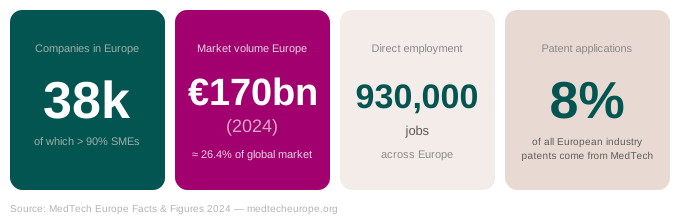
- There are around 38,000 MedTech companies in Europe, about 90% of which are small and medium-sized enterprises (SMEs).
- The MedTech sector is one of the most innovative industrial sectors, accounting for
about 8% of all industrial patent applications in Europe. - MedTech contributes significantly to the economy in terms of employment, exports, and innovation. The European MedTech industry directly employs more than 930,000 people.
- The European MedTech market is estimated at around €170 billion for 2024, representing
about 26.4% of the global market.
(Sources: MedTech Europe Employment & Companies , MedTech Europa Market , MedTech Europe Facts & Figures) )
Health, innovation, and sustainability: Why Invesdor focuses on MedTech and Healthcare Investments

According to an analysis by Deloitte („Europe’s MedTech Attractiveness“, 2025, Europe’s MedTech Report 2024) Europe is one of the most attractive regions for MedTech investments. In addition to a strong regulatory framework and excellent research, well-connected innovation clusters form the backbone of the European healthcare market.
These innovation clusters include in particular the Nordic countries. Finland has developed into a leading location for MedTech start-ups. You can learn what enables this success in the article „8 Reasons for the Success of Finnish MedTech Companies“
Health as a Growth Engine of the European Economy
The EFPIA report “The Case for Investing in a Healthier Future for the European Union” also shows that every euro invested in the healthcare sector leads to higher quality of life, lower disease costs, and a more resilient economy in the long term. EFPIA concludes that health should be viewed not merely as a cost factor but as a driver of economic growth.
The European MedTech sector is strongly export-oriented. According to MedTech Europe 2024, around 60% of global medical technology exports originate from Europe. For investors, this means stable international demand, currency diversification, and growth beyond national markets.
Sustainability and Regulation Are Becoming More Important
Invesdor views health as a central pillar of sustainable investments. Medical innovation directly improves the lives of millions of people while creating scalable business models. Every funding request is reviewed before being listed on our platform. The connection to the UN Sustainable Development Goals (SDGs) plays an important role. Depending on the project, the following goals are particularly relevant:

Good Health and Well-being (SDG 3)
MedTech and healthcare projects improve patient care. Modern diagnostics, digital systems, and new therapies enable earlier treatment and increase the chances of recovery. Every investment in this field directly contributes to improving health and quality of life.

Gender Equality (SDG 5)
Many MedTech and healthcare projects specifically address the needs of women in healthcare. From innovations in neonatology to technologies for female-specific diseases, solutions are emerging in areas that have long been neglected. Investments in such projects strengthen gender equality in healthcare and improve care for female patients.
Affordable and Clean Energy (SDG 7)
Energy efficiency also plays a role in healthcare. Modern devices and digital systems are increasingly designed to consume less electricity and to function reliably even in regions with unstable energy supply. For investors, this means supporting companies that use sustainable technologies while reducing costs for hospitals and patients.
Industry, Innovation and Infrastructure (SDG 9)
Healthcare investments promote modern technologies and the expansion of medical infrastructure. This includes robotic support systems, digital platforms, and flexible diagnostic solutions. Investors support companies that transform research innovations into market-ready products.

Reduced Inequalities (SDG 10)
Many healthcare projects make high-quality care accessible to more people. Pay-per-use models or mobile devices help hospitals in regions with weaker infrastructure. Investments therefore contribute to greater equality in healthcare systems.

Responsible Consumption and Production (SDG 12)
More and more companies are developing MedTech solutions that are resource-efficient and durable. They rely on reusable components and efficient production processes. Investors thus promote both medical impact and responsible resource management.

Partnerships for the Goals (SDG 17)
Progress in healthcare emerges through collaboration. Start-ups, hospitals, universities, and investors work together to bring innovations to market faster. Every investment strengthens this network and amplifies the impact of medical advancements.
We select projects that meet SDG standards. This ensures that investors support robust business models while contributing to solutions that promote ecological, social, and economic sustainability in healthcare.
Challenges and Opportunities for Sustainable Investments in MedTech and Healthcare
The healthcare and MedTech sector is considered one of the most exciting areas for investors—stable, innovative, and with clear societal relevance. At the same time, it is complex: regulations, clinical trials, and technological developments determine the pace and involve elevated risks. Investors should understand these mechanisms and be prepared for longer timelines. With foresight, real and sustainable value can emerge.
Opportunity
Risk / Note
01
Risk
Medium- to Long-Term Time Horizon
New medical technologies take time. From the initial idea through preclinical testing to regulatory approval, several years often pass. During this period, revenues may still be limited while development costs must be financed. Once a product reaches the market, its value can increase significantly, particularly after successful CE certification or completed clinical trials.
02
Opportunity
More Favorable Risk–Return Profile
Many companies on Invesdor are no longer in the highest-risk start-up phase. They have already achieved important milestones such as CE certification, clinical trials, or initial revenues. This allows investors to benefit from a more favorable risk–return profile while gaining access to companies with strong scaling potential.
03
Risk
Plan for Multiple Financing Rounds
Developing medical technology products often requires several financing rounds. Each round brings new opportunities but can also lead to dilution. Valuations often increase as development progresses, even before significant revenue is generated, creating value through technological advancement.
04
Opportunity
CE Certification as a Key Milestone
In healthcare, CE certification is a major milestone. It opens access to the European market and signals that a product meets all safety and quality standards. For investors, this often marks the transition from development to scaling and therefore significant growth potential.
05
Opportunity
Exit Opportunities Through Acquisitions
Successful MedTech companies are often acquired by larger corporations or enter partnerships with global players. These exits can generate substantial value increases for investors. Innovative niche solutions are frequently integrated into international healthcare companies within a relatively short period of time.
06
Opportunity
Co-Investors as a Signal of Confidence
When institutional or experienced industry investors participate, they contribute not only capital but also expertise and networks that help companies navigate regulatory hurdles and accelerate growth. For private investors, this provides additional stability and confirmation that the business model is viable.
From Research to Practice: Examples of Successful MedTech Investments
The following examples illustrate different areas of modern MedTech investments. They range from highly specialized diagnostics to digital platform solutions and practical medical aids for everyday life. Each project addresses a clear clinical need, relies on scalable technology, and combines measurable healthcare impact with a sustainable business model. This highlights what matters to investors: evidence-based solutions, transparent milestones, and a clear path to scaling.
Megin: precise brain diagnostics with MEG technology, used worldwide
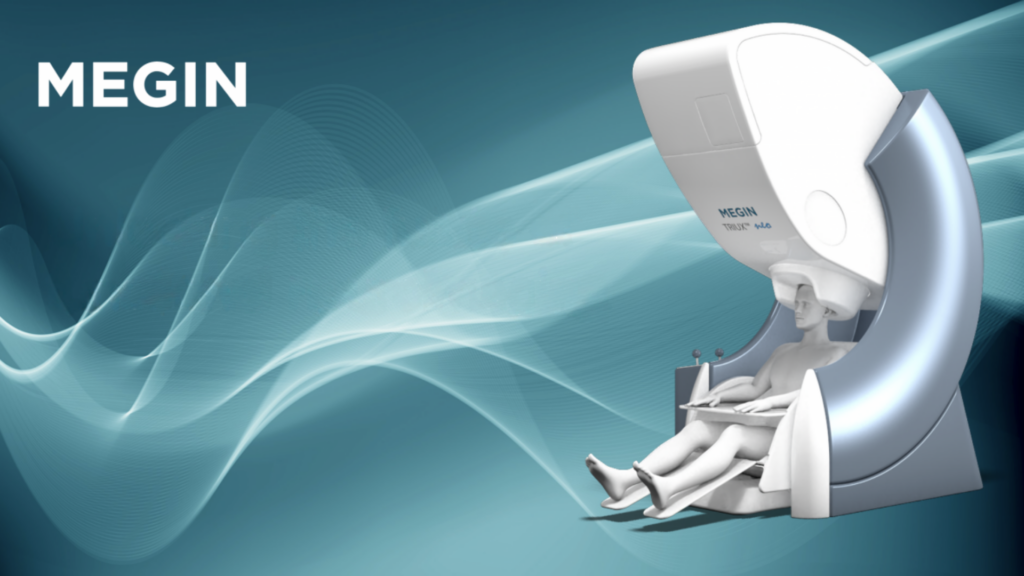
Megin is a Finnish MedTech company specializing in magnetoencephalography (MEG). This technology measures the magnetic fields generated by electrical signals in the brain, enabling physicians to analyze brain activity in real time.
This is particularly helpful for complex neurological conditions such as epilepsy or brain tumors. More precise diagnostics simplify the planning of surgeries and therapies.
Megin was founded in 1989 and is headquartered in Helsinki. The company is one of the global leaders in MEG technology. More than 120 systems are already installed in hospitals and research institutions. According to the company, it holds over 80% market share in new MEG system installations.
Clinical need and solution: precise mapping of brain function
Neurological diseases often present medicine with a precision challenge. For many procedures, it is crucial to accurately locate specific brain regions.
Megin’s TRIUX Neo system measures the weak magnetic fields produced by neuronal activity. This allows functional brain areas to be visualized with extremely high temporal and spatial resolution. The method is non-invasive and does not involve radiation exposure.
This information helps physicians plan procedures more precisely and reduce risks.
Technology and status: established solution in a specialized market
Megin is considered an established provider in a technically demanding segment of medical technology. Its systems are used worldwide in hospitals and research institutions. Patents, specialized technical expertise, and regulatory requirements create barriers to entry for new competitors. At the same time, demand for precise brain diagnostics is increasing as neurological diseases rise globally.
Impact: better diagnostics and more targeted treatments
When physicians can localize brain functions more precisely, surgeries and therapies can be planned more effectively. This helps reduce risks and improve treatment outcomes. This aligns with the sustainability goal SDG 3 “Good Health and Well-being.” Advances in neurological diagnostics contribute to improving patient care in the long term.
Investor benefit: fixed-interest bond with clear terms
The company was financed through a bond. The terms are clearly structured:
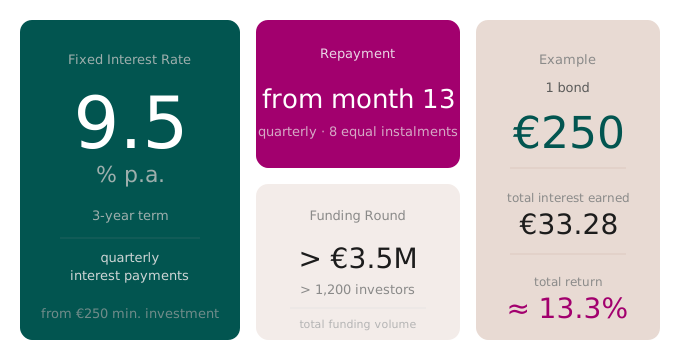
The financing round reached more than €3.5 million and was supported by more than 1,200 investors.
Megin generates revenue through the sale of MEG systems and service contracts for maintenance and operation. These service contracts provide recurring revenue.
Risks and management: investment cycles and regulatory requirements
The market for highly specialized medical technology is characterized by investment cycles. Hospitals often make large equipment decisions on a long-term and project-based basis. In addition, the installation of an MEG system requires specialized infrastructure such as magnetically shielded rooms. Regulatory requirements and production processes also shape the industry. Megin addresses these challenges through decades of industry experience, an installed system base, and international customer relationships.
Megin illustrates how specialized medical technology can combine investment opportunities with medical progress. Hospitals gain access to precise brain diagnostics while investors participate through a structured bond in the further development of this technology.
Pirche: AI-powered platform making organ transplantation more predictable

Pirche develops a digital diagnostics platform for transplant centers and clinical laboratories. After an organ transplant, immunological compatibility often determines how long a transplanted organ remains functional. Pirche focuses precisely on this point. The platform combines genetic typing with AI-driven modeling and supports physicians in identifying risks earlier and managing therapies more precisely.
The need is significant. Many transplanted organs lose function within five to ten years. For patients, this means additional procedures, intensive treatments, and increased health burdens. Any improvement in donor organ matching and post-transplant care can therefore make a meaningful difference.
Clinical need and solution: better matching and more targeted follow-up care
In transplant medicine, laboratories and medical teams already compare key parameters such as blood type and HLA markers. However, this information is not always sufficient to reliably estimate long-term risks. Pirche expands this analysis with additional immunological models.
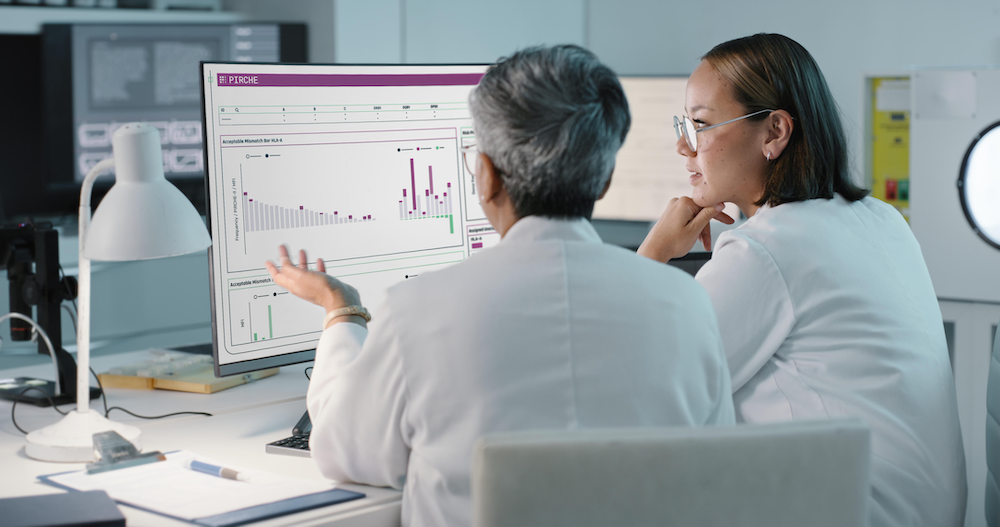
The platform creates individualized immune risk profiles and supports clinical decision-making with advanced analyses. It uses data that is already available in many clinical laboratories, allowing the technology to integrate into existing workflows without requiring additional data collection.
Technology and status: patent-protected, scientifically documented, integrated into hospital IT
Pirche combines genetic typing with AI-based analysis to visualize complex interactions between donor and recipient. The underlying algorithms are protected by patents and have been examined in numerous scientific publications.
The platform has already been used in a large number of patient cases and further developed in collaboration with international hospitals and research institutions. Partnerships with laboratory providers such as Thermo Fisher Scientific and Werfen-Immucor facilitate integration into existing hospital IT systems.
Impact: better treatment outcomes and more efficient resource use
When risks are identified earlier, follow-up care and immunosuppression can be adjusted more precisely. This can help reduce complications and extend the functional lifespan of transplanted organs. Such progress contributes to SDG 3 “Good Health and Well-being.”
Responsible use of medical resources also plays a role. Donor organs are extremely scarce. More precise matching can help extend their usability and avoid repeated procedures.
In addition, the analysis considers specific risk groups in transplant medicine, such as highly sensitized patients. This can help reduce inequalities in healthcare access.
Investor benefit: participation in a scalable B2B SaaS platform
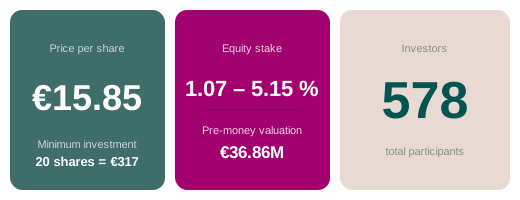
The financing took place through an equity investment (security). The price per share was €15.85, with a minimum investment of 20 shares. Between 1.07% and 5.15% equity was offered at a pre-money valuation of approximately €36.86 million. In total, 578 investors participated.
The business model is based on software-as-a-service contracts with transplant centers and clinical laboratories. Hospitals access the platform through subscriptions, while partnerships with laboratory service providers enable further integration opportunities. Such models can generate recurring revenue when software becomes permanently integrated into clinical workflows.
The investor base includes experienced entrepreneurs and investors from the healthcare industry, including individuals with backgrounds in biotechnology. These investors contribute not only capital but also industry expertise and networks.
Risks and management: clinical adoption, regulation, and market dynamics
Digital diagnostics in clinical practice requires trust, strong evidence, and seamless integration. Pirche addresses these requirements through scientific documentation, a large number of evaluated cases, and IT partnerships. Nevertheless, the speed at which hospitals adopt new decision-support software into processes and budgets remains a key factor.
Regulatory requirements for healthcare software, particularly AI-based systems, also shape development. Pirche focuses strongly on the US transplant market, which offers opportunities but also introduces certain dependencies.
Pirche demonstrates how digital diagnostics can create value in a highly critical medical field. Hospitals gain a platform for improved risk management, patients may benefit from more stable outcomes, and investors participate in a patent-protected B2B SaaS model with documented usage and a clear commercialization strategy.
STIL: Steady Hands for an Independent Life
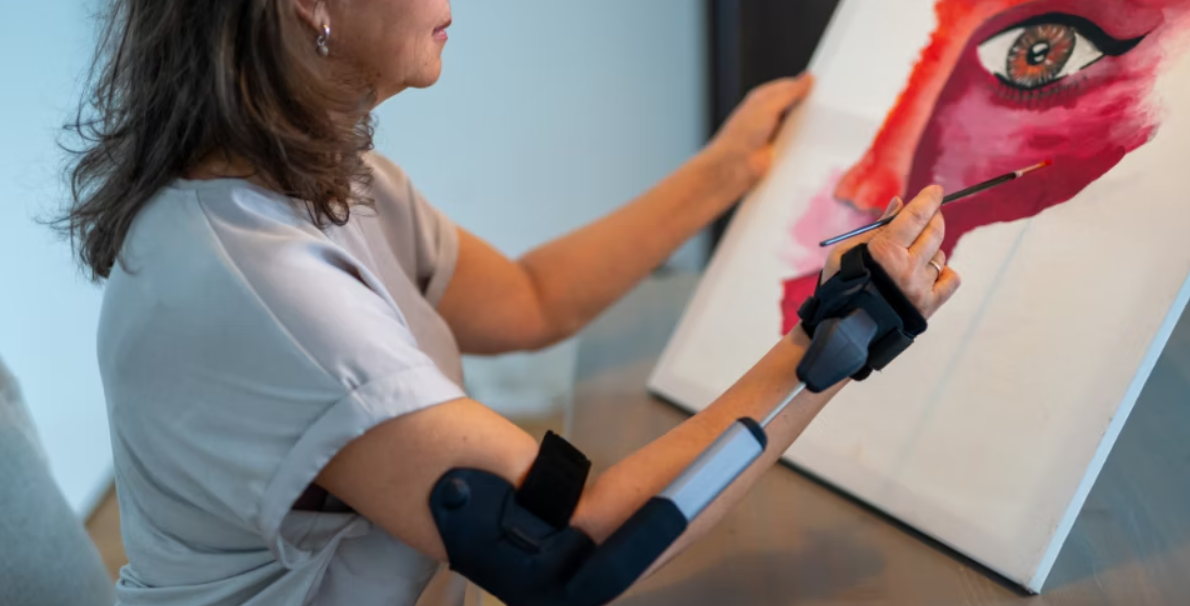
STIL develops an orthosis that stabilizes the hands. A cup of coffee remains steady. A pen produces a readable signature again. A shirt button can be fastened without help. This is exactly where the STIL orthosis helps. It sits lightly on the forearm, specifically dampens tremors, and works immediately. Clinical data shows tremor reduction of more than 80 percent. Users regain control, can perform everyday tasks independently, and feel more confident.
Since 2023, STIL has been in use—first in the Netherlands and now also in Germany, Belgium, and Italy. Medical supply stores and orthopedic partners fit the orthosis and support users, bringing the solution directly into daily life.
Clinical need and solution: effective, practical, immediately available
Tremors significantly limit everyday life. Eating, writing, or dressing becomes difficult. Shame often leads to social withdrawal.
The STIL orthosis mechanically stabilizes the arm. It dampens uncontrolled movements without restricting natural motion. The effect is immediate. No electricity is required. The orthosis is easy to put on and adjust, even at older ages. Medical supply providers and orthopedic specialists support patients locally.
Technology and status: certification and clinical data
The STIL orthosis is CE-certified and FDA-registered. STIL operates under ISO 13485. A clinical study demonstrates its effectiveness for essential tremor, while additional studies are expanding its application to Parkinson’s disease and other movement disorders. The modular design adapts to different sizes and needs. Distribution partners in the Netherlands, Germany, Belgium, and Italy expand market reach. A new AI-based app supports screening and simplifies initial assessments for patients and distributors.
Impact: more independence, lower costs, stronger participation
Reduced tremors allow people to eat, write, and work independently again. This strengthens dignity and participation. Hospitals and insurers benefit from a non-invasive alternative to surgery or long-term medication. The orthosis helps reduce follow-up costs and relieve healthcare systems. It contributes to SDG 3 and, through durable and repairable product design, also supports SDG 9 (Industry, Innovation and Infrastructure), SDG 10 (Reduced Inequalities), and SDG 12 (Responsible Consumption and Production).
Investor benefit: validated technology, rapid distribution, large market
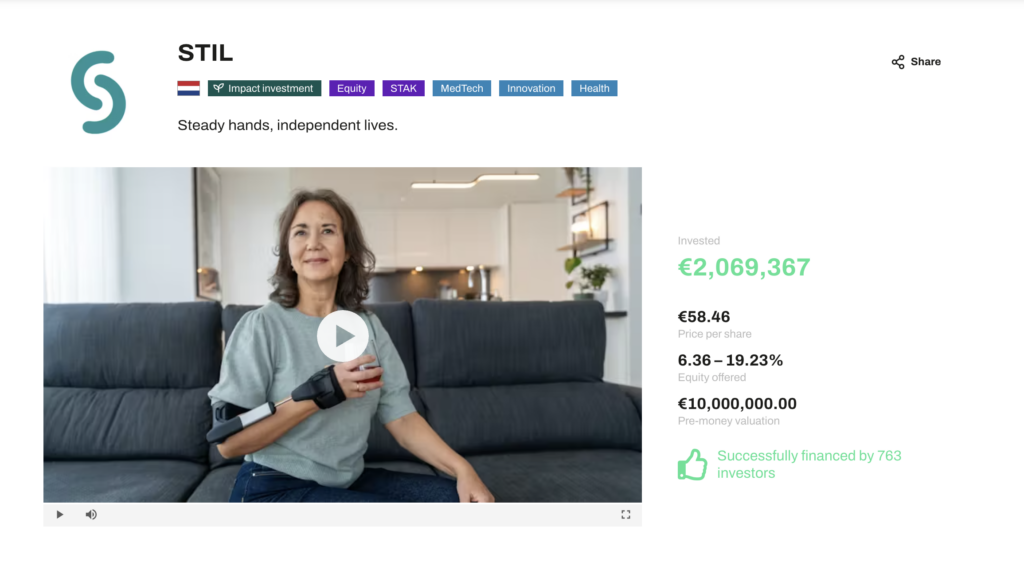
STIL combines medical benefit with a clear go-to-market strategy. Distribution runs through an established network of medical supply stores and orthopedic partners, including Ottobock (Italy), STOLLE (Germany), and VIGO (Belgium). The addressable market in the EU and the US is worth billions. Renowned investors such as Health Innovations, Rabobank, the EIC Accelerator, and the Brain Foundation Netherlands support growth. The latest valuation was €10 million pre-money. The round offered strengthened shareholder rights for new investors and followed a clear exit logic.
Risks and management: reimbursement, adoption, scaling, regulation
Reimbursement pathways vary by market. STIL works with pilot centers, key opinion leaders, and partners to secure coverage. Adoption in daily practice is supported by training, simple fitting processes, and distributor support. Scaling and supply chains are planned step by step with clear quality processes. CE certification, FDA registration, and ongoing studies reduce regulatory uncertainty. The AI screening app improves matching and increases success rates in patient care.
STIL brings a clinically validated, non-invasive solution into standard care. Patients gain independence in daily life. Healthcare providers operate more efficiently. Investors gain access to a scalable MedTech company with a clear distribution strategy, growing partnerships, and strong validation.
Healthcare investments: benefits for people and investors
Investments in MedTech and healthcare combine economic stability with social impact. They allow investors to actively contribute to improving medical care while achieving attractive long-term returns.
MedTech and healthcare projects are a valuable addition to a diversified portfolio. They respond to global megatrends such as demographic change, technological innovation, and the growing demand for efficient healthcare.
For Invesdor, it makes sense to focus on companies that:
 develop new medical technologies that improve diagnostics, therapy, or care, optimize existing systems by digitizing processes or making devices more sustainable, expand medical infrastructure, for example through pay-per-use models or mobile solutions, scale internationally to bring innovations to new markets more quickly.
Such projects meet clear sustainability and quality standards and offer strong value creation potential.
The healthcare sector is considered particularly resilient: people require medical services regardless of economic cycles. Healthcare investments therefore offer long-term stability. Companies with CE certifications and validated clinical data increasingly meet strict regulatory requirements, which further strengthens their market position.

MedTech and healthcare offer growth potential through scaling, market expansion into new regions, and possible exits to larger corporations. Investors benefit from the combination of measurable impact, innovation dynamics, and predictable return models—whether through bonds with fixed interest or equity investments with upside potential.

As with any asset class, risks exist. In the MedTech sector, these include potential delays in studies, regulatory changes, or longer approval processes. Liquidity challenges or dilution in follow-up financing rounds can also influence return profiles. Equity investments also carry the risk of partial or total loss.
A structured due diligence process such as the one applied by Invesdor helps reduce these risks.
Projects are evaluated based on financial metrics, clinical evidence, ESG criteria, and sustainability standards. This provides investors with access to vetted, viable, and impact-oriented companies.
An investment in the healthcare sector allows investors to influence the future of medical care. Those who invest in MedTech and healthcare contribute to accelerating innovation, improving patient access to treatment, and strengthening healthcare systems worldwide—while combining this social contribution with a clear economic perspective.
God to know: How Invesdor selects Healthcare and MedTech projects
Invesdor reviews every project through multiple stages to ensure quality, transparency, and sustainability:
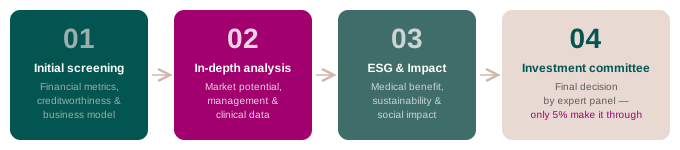
Only about 5% of submitted projects make it onto the Invesdor platform. Further details about the evaluation process for investment opportunities can be found here: Investment Evaluation Process.
Invest in health now: your chance to actively shape the future!
Healthcare and MedTech investments combine financial stability with social impact. Investors support innovations that improve lives—from advanced diagnostics and digital health solutions to new medical technologies. At the same time, they benefit from a growth market that is largely independent of economic cycles.
Those who invest in this sector promote progress, improve access to better care, and actively shape the future of medicine.
Discover current investment opportunities on Invesdor:
projects that combine medical progress with economic potential.

Start today and invest in a healthier future!


Join many others, create your account!


100+
Related articles
COMETUM Interview: Inside Pre-IPO Access to Stripe, SpaceX and Anthropic
Interview with COMETUM Inside Access: How COMETUM Brings Investors Closer to Giants Like Stripe, SpaceX and Anthropic Most private investors assume that companies like Stripe, SpaceX and Anthropic are simply out of reach before they…
How Direct Digital Investing can pave the way to the Stock Market
BIOGENA • Investment story • Direct digital investment BIOGENA investment story A family business becomes a health group. What began for BIOGENA as a family-run micronutrient company is today a health group with more than…

Real Estate as an Investment: Is Now the Right Time to Get Started?
The real estate market has changed: financing has become more complex, capital more selective, and project execution more demanding. At the same time, demand for new housing remains high — many projects today fail not…